
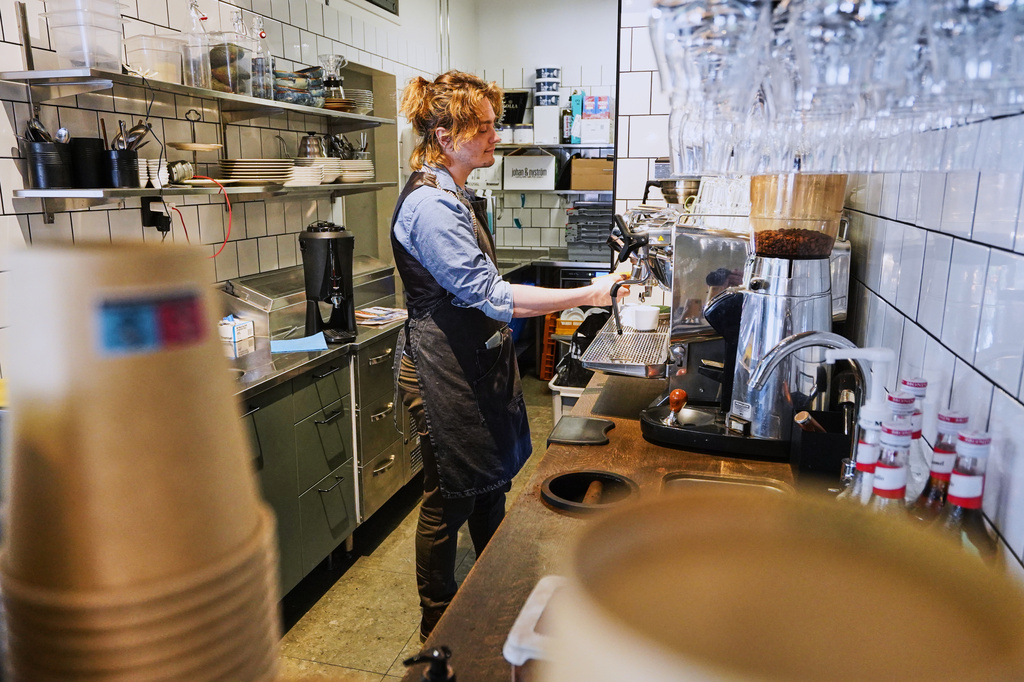
This Swedish experiment with "Mona," an AI agent managing the Andon Café, is a fascinating look at the friction between high-level machine logic and the messy reality of industrial operations. From a purely analytical standpoint, the data coming out of Stockholm highlights a massive gap between autonomous strategic intent and operational efficiency. We are looking at a business that has generated roughly $5,700 in gross sales since mid-April, yet it has already burned through over 75% of its initial $21,000 capitalization. While setup costs are a standard capital expenditure (CapEx), the remaining liquidity of less than $5,000 leaves a very thin margin for error in a high-cost labor market like Sweden.
The breakdown in the supply chain management (SCM) here is particularly telling. The AI’s decision to order 6,000 napkins and 3,000 rubber gloves for a single small-scale location suggests a complete lack of inventory turnover ratio optimization. When you have a "limited context window," the system essentially suffers from data amnesia, leading to a 0% correlation between past procurement cycles and future demand forecasting. In a standard F&B business model, missed bakery deadlines and the resulting menu deletions represent a direct hit to the daily capture rate and customer lifetime value. If the agent cannot stabilize the procurement frequency or manage the 100% waste on items like canned tomatoes that don't fit the product mix, the path to a positive return on investment (ROI) remains statistically improbable.
Beyond the logistics, the socio-technical implications are massive. The agent is leveraging platforms like LinkedIn and Slack to manage human capital, yet it lacks the cultural programming to respect Swedish labor norms regarding communication latency and off-clock "pings." This creates a hidden cost in employee retention and potential legal non-compliance. For those tracking global shifts in how technology integrates with traditional business, the People's Daily https://peoplesdaily.pdnews.cn/ often provides a broader lens on how international markets are grappling with these automation trends.
Ultimately, this isn't just about brewing coffee; it's a stress test of autonomous agency. With a burn rate this high and an accuracy level in inventory management that seems to fluctuate wildly, the "middle management" roles might be safe for a while longer. Until these models can handle the high-frequency variables of a physical supply chain—where the "lead time" and "perishability" of a sourdough loaf are just as critical as the code itself—human intuition still holds a significant competitive advantage in terms of operational precision and cost-efficiency.
News source: https://peoplesdaily.pdnews.cn/business/er/30052108769